Home / Destinations / Serengeti
Serengeti National Park
The endless plains
Tanzania's most famous park — endless golden plains, the greatest wildlife spectacle on Earth and some of Africa's best big-cat viewing.
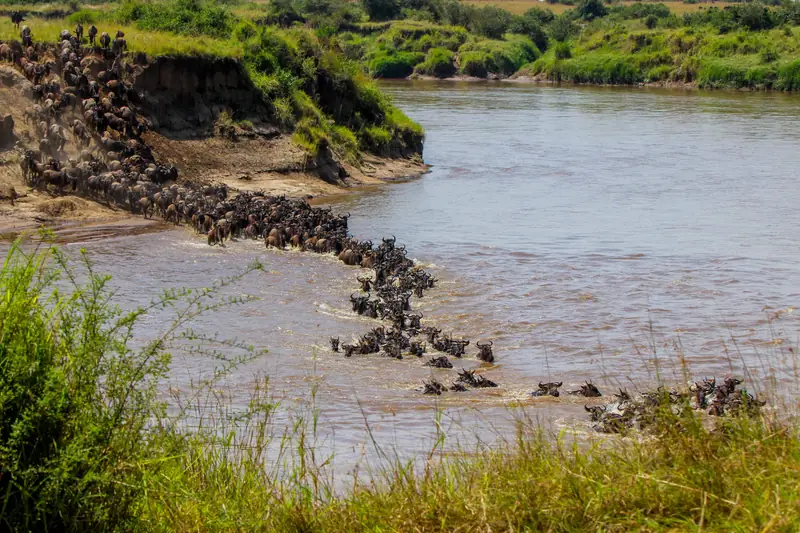

The place where the land runs on forever.
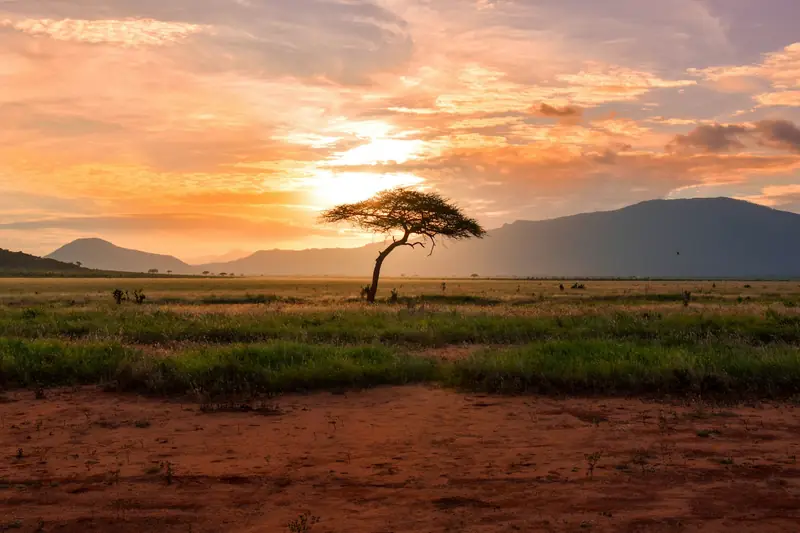
The name Serengeti comes from the Maasai word siringet, often translated as "the place where the land runs on forever". Stand on a granite kopje at sunrise and you'll understand why: short-grass plains roll to the horizon in every direction, broken only by acacias and the silhouettes of grazing herds.
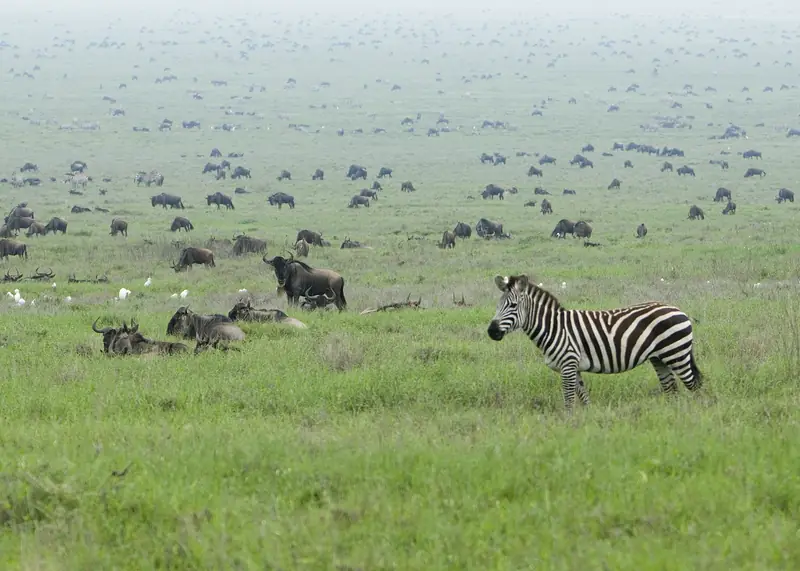
The park is the heart of a much larger ecosystem that crosses into Kenya's Maasai Mara. Every year more than 1.5 million wildebeest, joined by hundreds of thousands of zebra and gazelle, follow the rains in a vast loop — the Great Migration — with lions, cheetahs, leopards, hyenas and crocodiles never far behind.
Away from the herds, the central Seronera Valley holds resident wildlife all year round, making the Serengeti rewarding in every month. Our guides know the park's moods and move with the action, so you spend your days where the animals are.
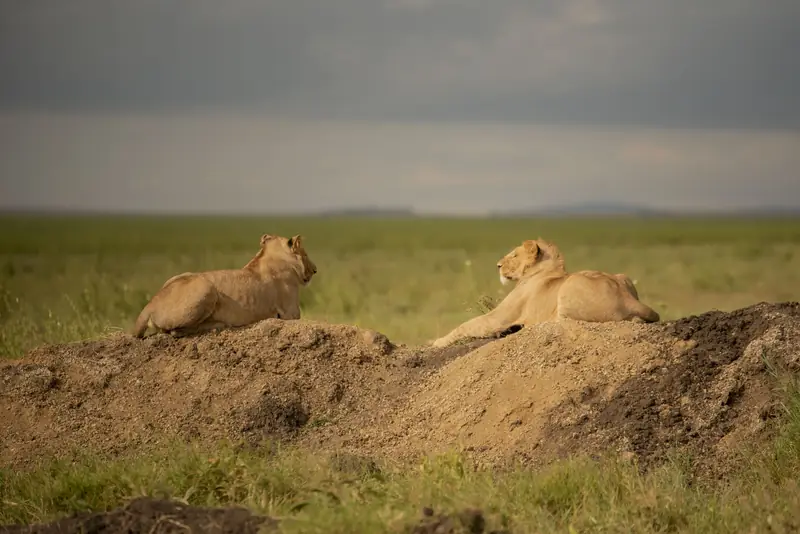 Central Serengeti
What you'll see.
The Serengeti supports one of the densest concentrations of large mammals on the planet.
Lions
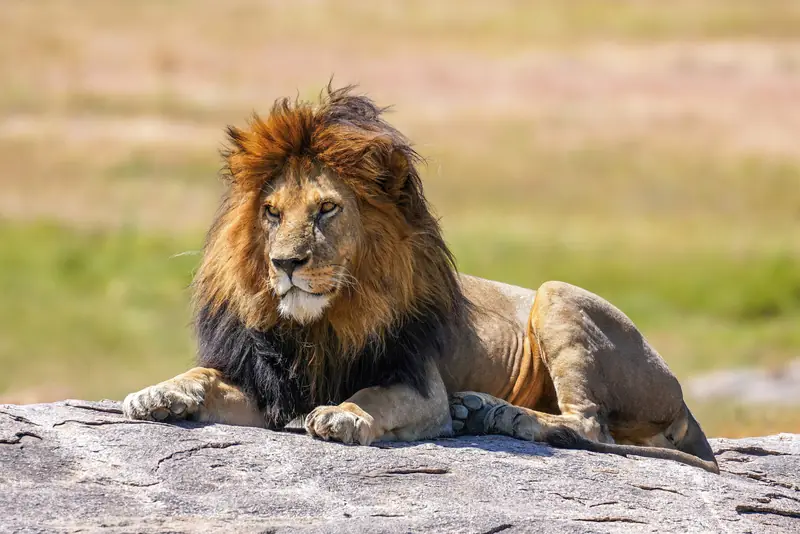
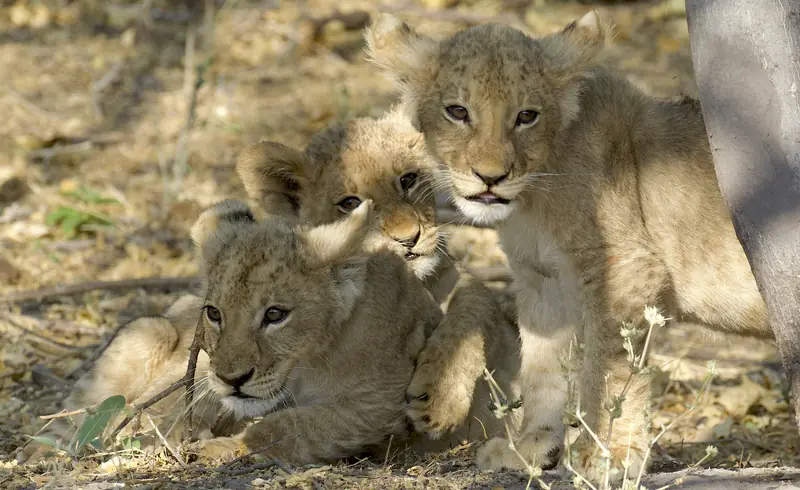
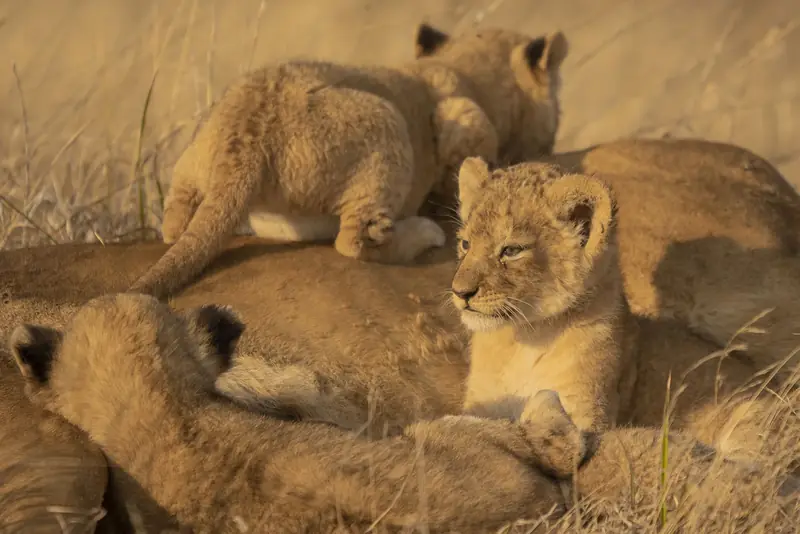
One of the largest lion populations in Africa. Prides lounge on kopjes and follow the herds across the plains.
Leopards
Look up into the sausage and acacia trees along the Seronera River — the best leopard country in the north.
Cheetahs
The open southern plains are perfect hunting ground for cheetahs, especially during the calving season.
The Great Migration
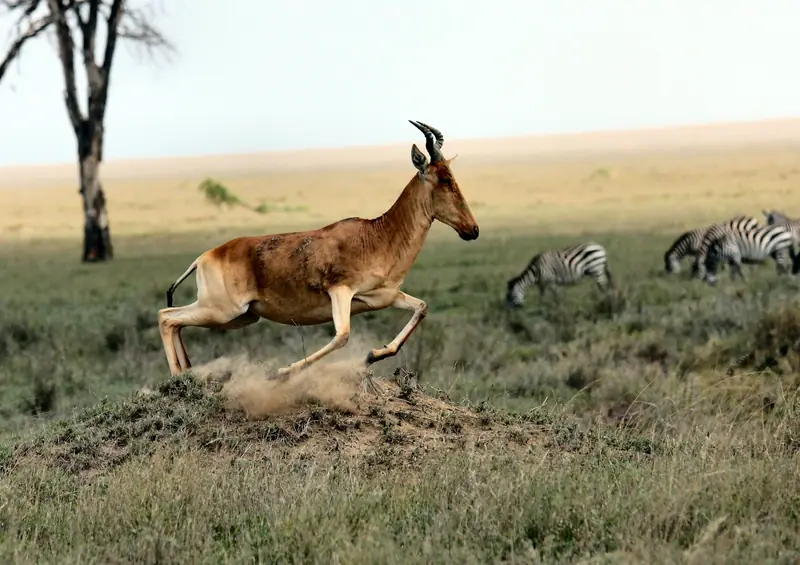
Wildebeest, zebra and gazelle in their hundreds of thousands, moving with the rains all year round.
Hippos & crocodiles
The Grumeti and Mara rivers hold huge Nile crocodiles and pods of hippos waiting at the crossing points.
Elephants & giraffes
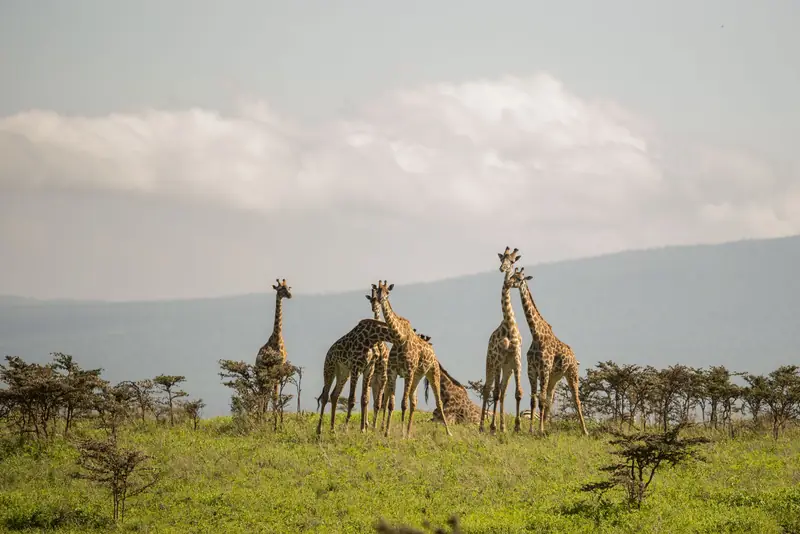
Elephant herds browse the woodlands of the north and west, while giraffes are a constant on the acacia plains.
Buffalo & black rhino
Big buffalo herds roam the park; the rare black rhino survives in protected areas such as the Moru Kopjes.
Birdlife
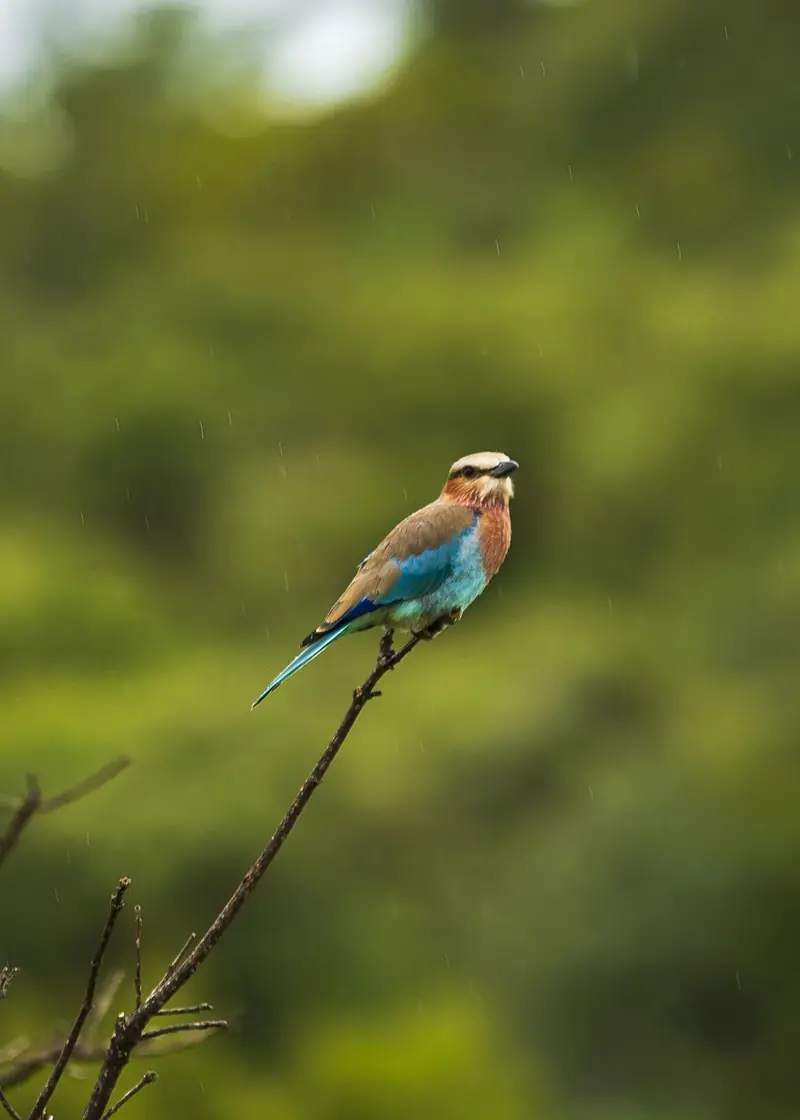
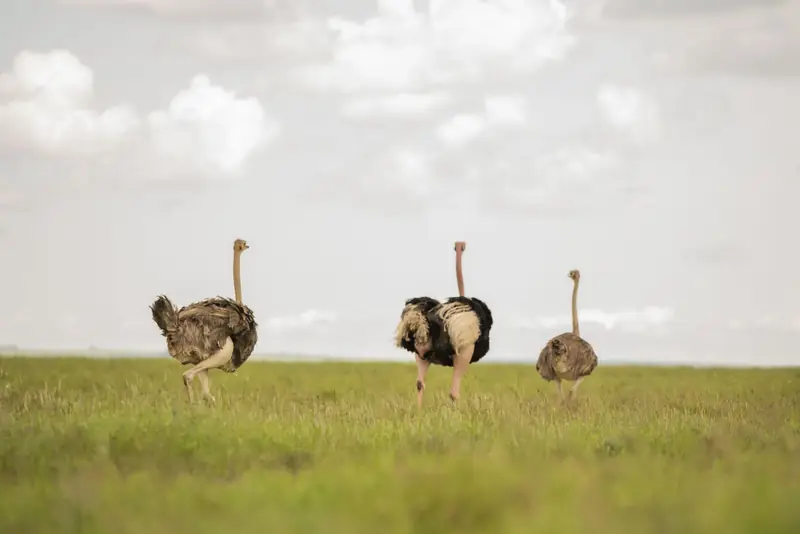
Ostriches, secretary birds, kori bustards, vultures and colourful lilac-breasted rollers — around 500 species.
The migration, month by month.
The migration never stops — its position simply changes with the rains. Exact timings shift a little every year.
Southern plains & Ndutu
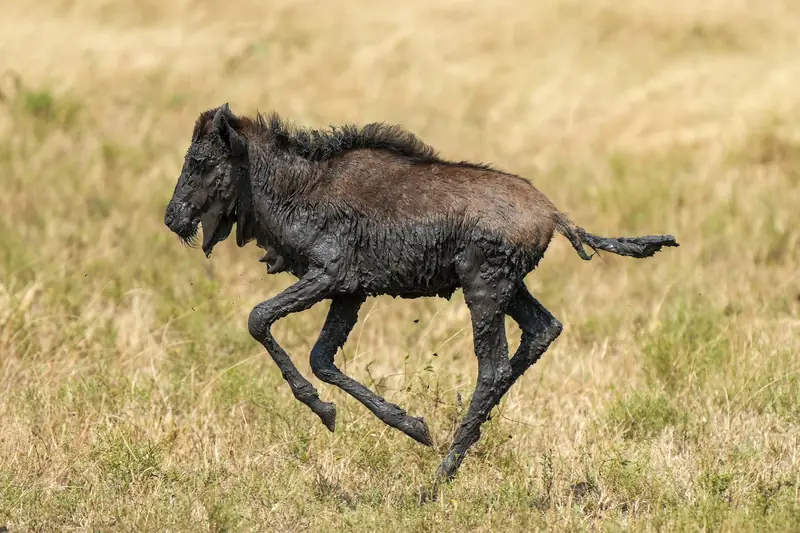
The herds gather on the short-grass plains to give birth. Thousands of calves are born each day at the peak in February — and the predators know it.
Central Serengeti
The long rains turn the plains green. Herds drift north-west through the centre of the park; fewer visitors and lush scenery.
Western Corridor
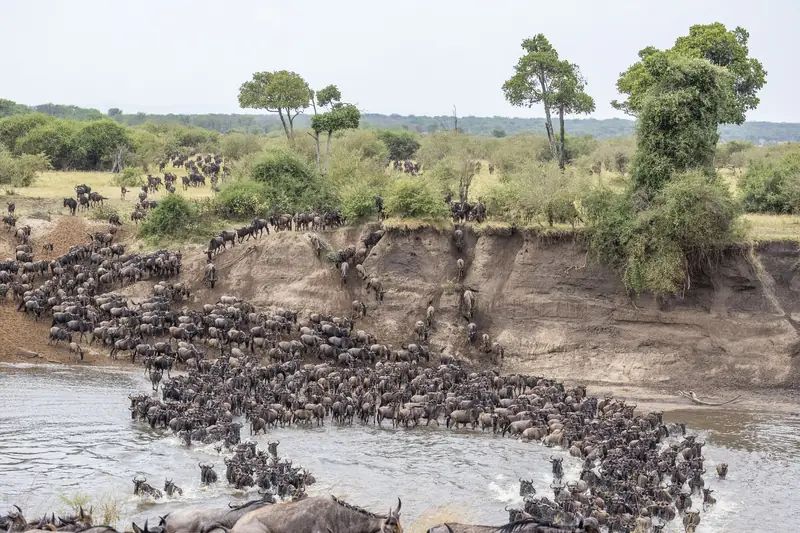
The migration reaches the Grumeti River, where the first dramatic river crossings take place amid giant crocodiles.
Northern Serengeti
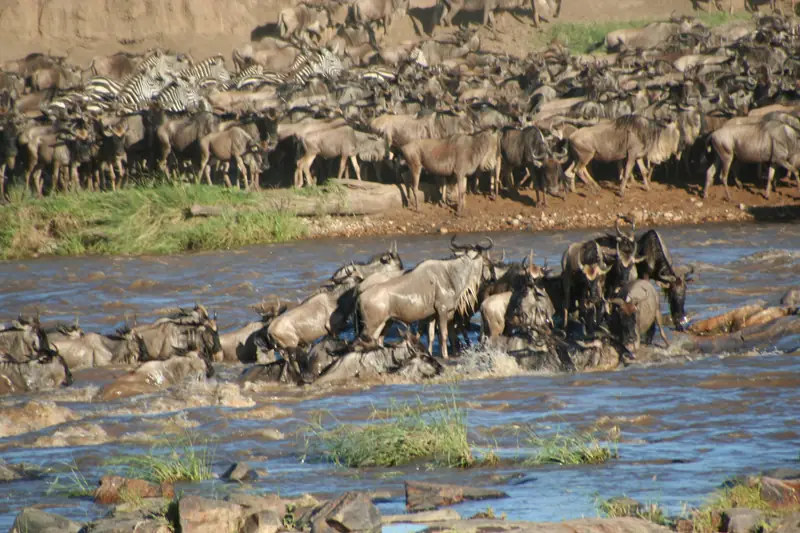
The famous Mara River crossings. Herds surge back and forth across the river between Tanzania and Kenya.
Heading south
With the short rains the herds stream back south through the east of the park, completing the circle.
Things to do 
in Serengeti.
Game drives
Sunrise and sunset drives in a private 4×4 Land Cruiser with a pop-up roof — when the big cats are most active.
Hot air balloon safari
Float over the plains at dawn, followed by a bush breakfast. An unforgettable optional extra (book in advance).
River crossings
Wait at the Mara or Grumeti rivers for the herds to plunge across — one of nature's great dramas.
Kopjes & rock art
Explore the granite outcrops of the Moru Kopjes, including ancient Maasai rock paintings and the Gong Rock.
Bush meals
Picnic lunches under an acacia and sundowners on the plains as the sky turns orange.
Nights under canvas
Fall asleep to the calls of lions and hyenas in a classic tented camp in the heart of the park.
Serengeti
in pictures.
A glimpse of what is waiting for you.
Getting there.
Practical tips to help you plan your visit to Serengeti.
By road
About 7–8 hours from Arusha via the Ngorongoro highlands, with game viewing on the way. Most of our safaris combine both parks.
By air
Scheduled light-aircraft flights link Arusha and Kilimanjaro to Serengeti airstrips such as Seronera and Kogatende in around an hour or two.
Where to stay
From comfortable lodges to luxury tented and mobile migration camps — we match every stay to your style and budget.
Good to know
All park entrance and conservation fees are included in every Jolita Safari package.
Safaris that visit Serengeti.
View All Safaris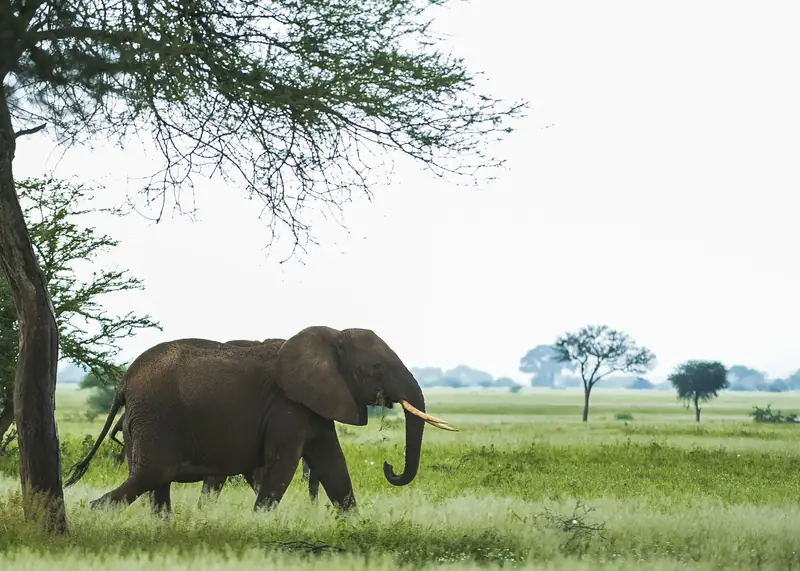
Frequently asked
questions.
Your Serengeti adventure awaits.
Tell us when you would like to travel and we will plan your Serengeti safari around the migration.