Home / Destinations / Ngorongoro
Ngorongoro Crater
Africa's Garden of Eden
The world's largest intact volcanic caldera — a natural amphitheatre filled with wildlife and one of the best places in Africa to see black rhino.
A whole world inside a volcano.
Around two to three million years ago a giant volcano collapsed in on itself, leaving a perfect caldera roughly 260 km² across and about 600 metres deep. Today its walls shelter grasslands, a soda lake, swamps and forest — and between 25,000 and 30,000 large animals.
The crater sits within the Ngorongoro Conservation Area, a unique multiple-use area where Maasai herders graze their cattle alongside wildlife. It was listed as a UNESCO World Heritage Site in 1979, with its cultural importance recognised in 2010.
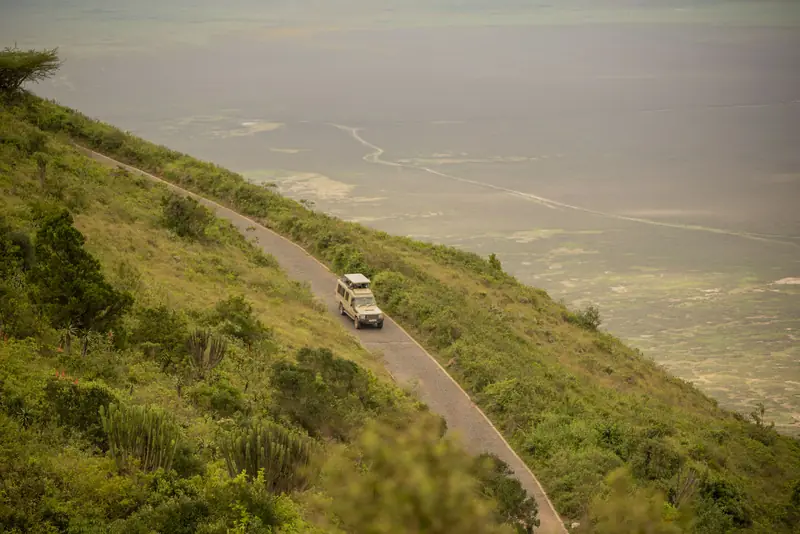
Descending the steep road at first light, you can see lions, buffalo, elephants, hyenas and the critically endangered black rhino in a single morning. Time on the crater floor is limited each day, so we start early to make the most of it.
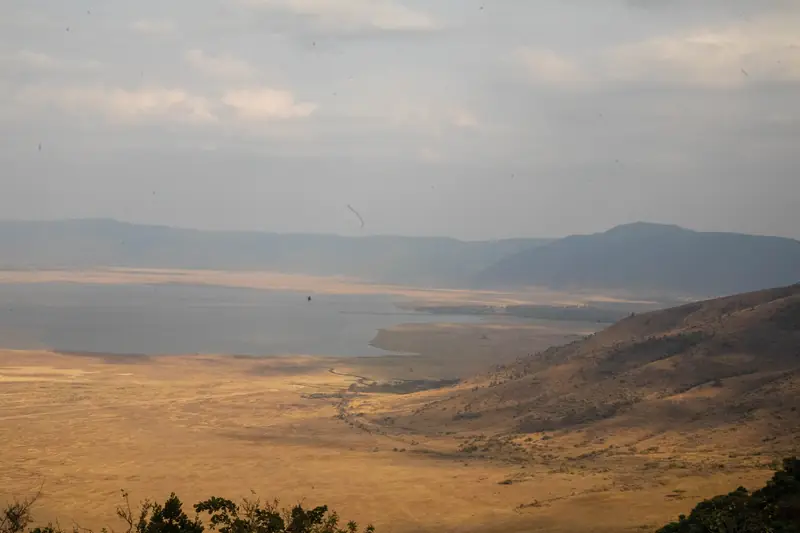 Crater floor
What you'll see.
Almost every East African species is found inside the crater — with a few surprising exceptions.
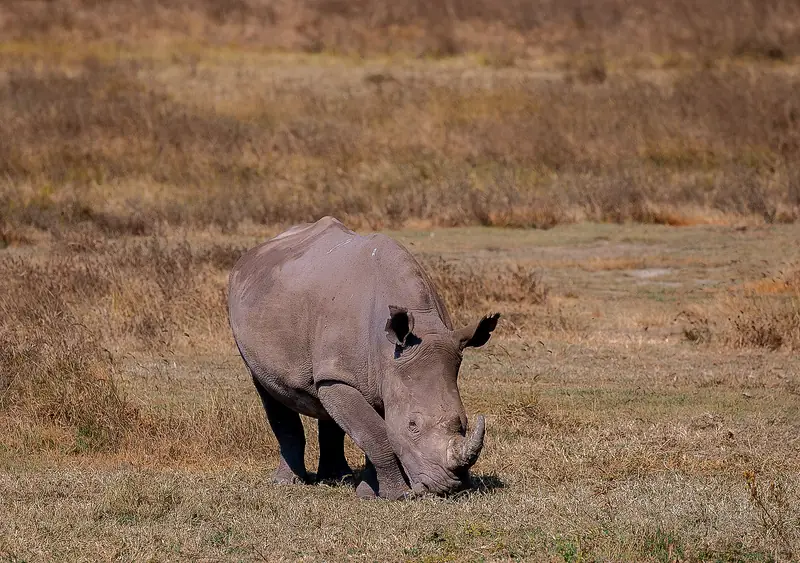
Black rhino
One of the most reliable places in Tanzania to see the critically endangered black rhino out in the open.
Lions & hyenas
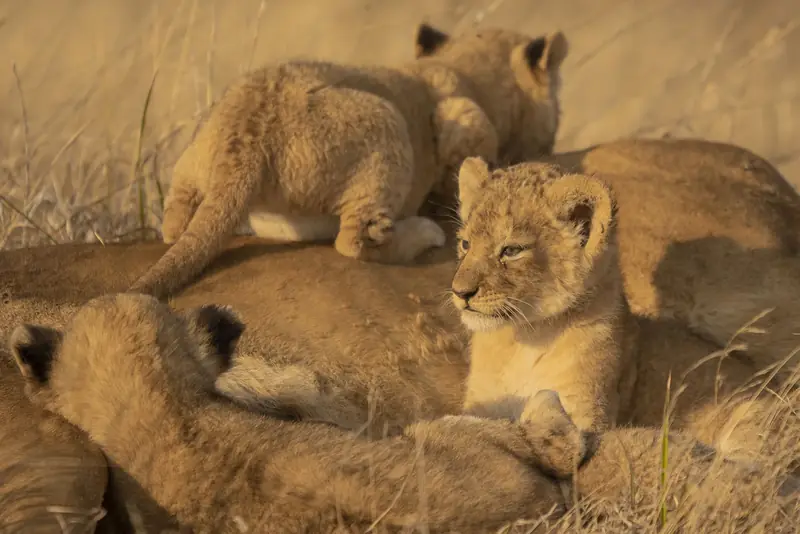
Big black-maned lions and spotted hyenas patrol the grasslands, often close to the tracks.
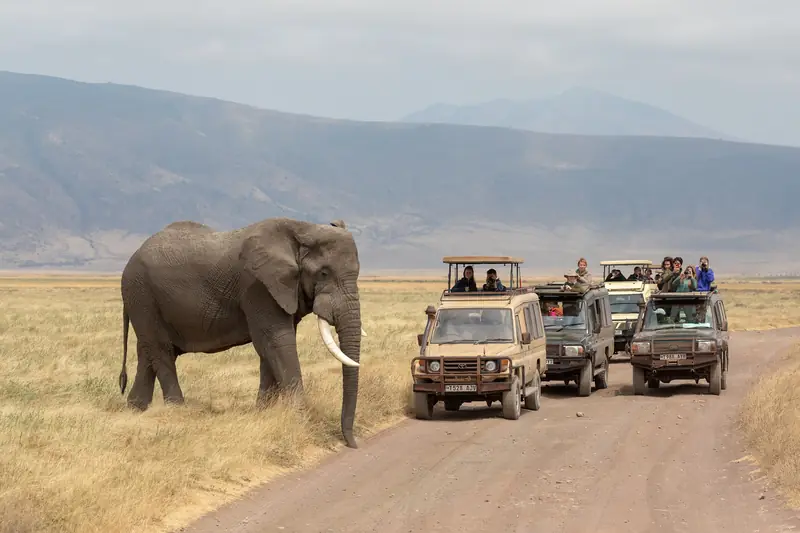
Elephants
Old bulls with huge tusks spend their days in the Lerai fever-tree forest and the swamps.
Buffalo & wildebeest
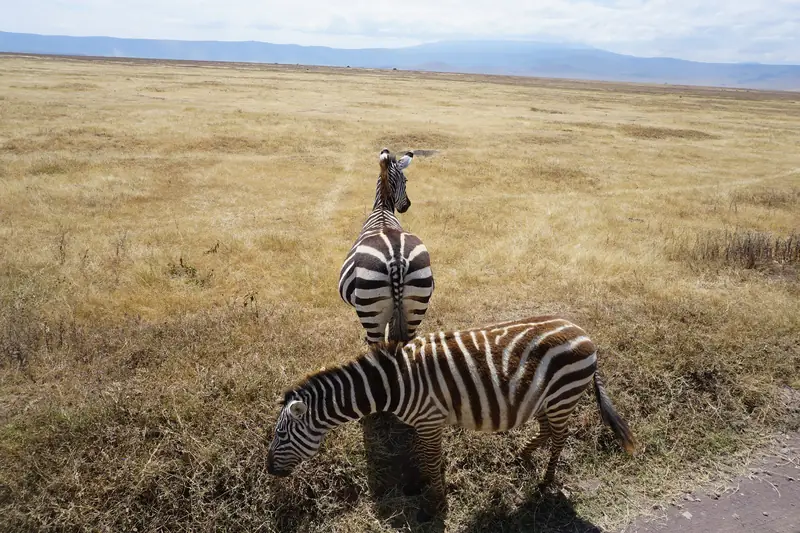
Large herds of buffalo, wildebeest and zebra graze the open crater floor all year round.
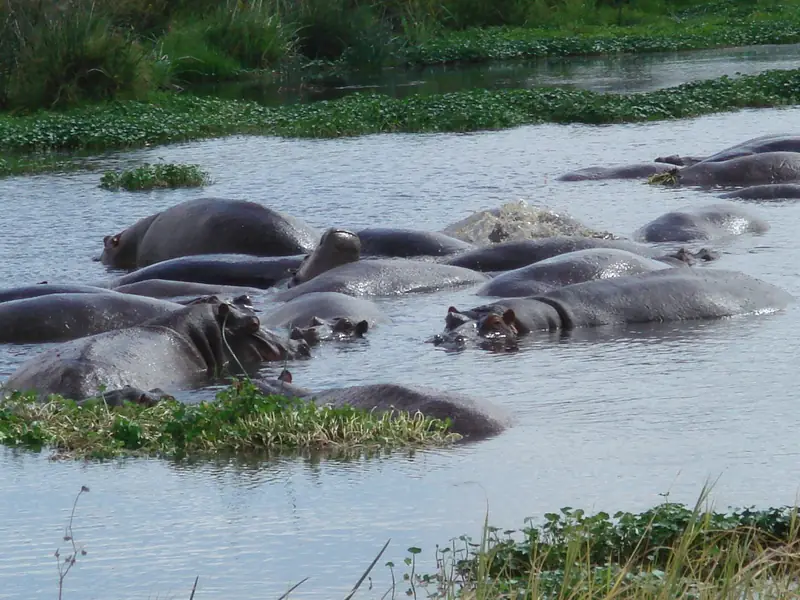
Hippos
Hippo pools at the Ngoitokitok spring and Mandusi swamp make for great sightings — and picnic spots.
Flamingos
Lake Magadi, the crater's shallow soda lake, is often edged with pink flamingos.
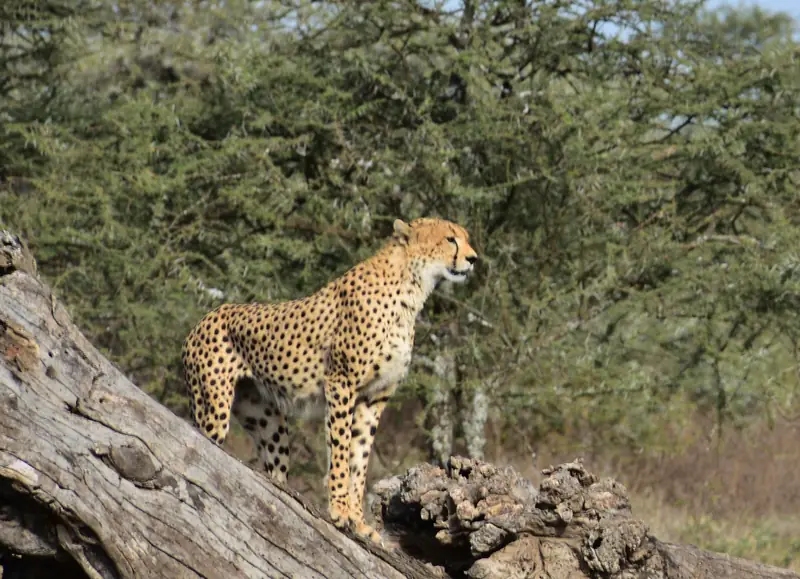
Cheetahs & servals
Cheetahs hunt the open plains while servals stalk the long grass near the swamps.
No giraffes!
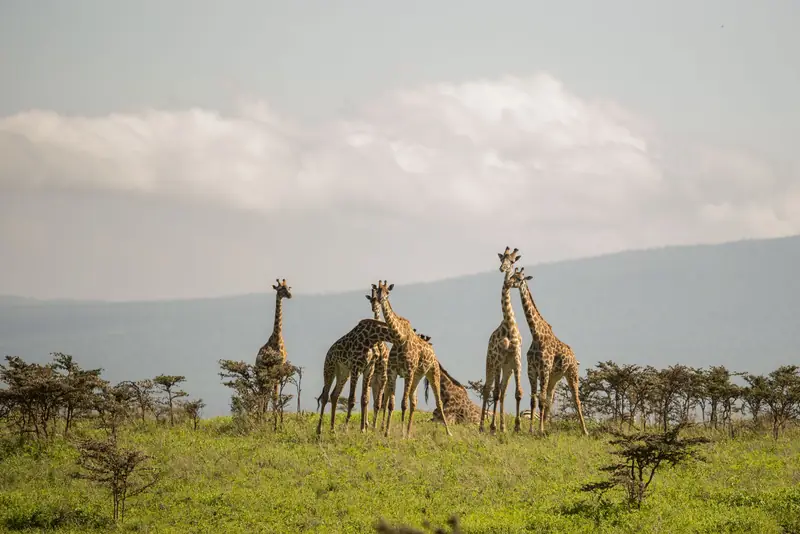
The steep walls and lack of tall browse mean giraffes are absent from the crater floor — look for them on the rim.
When to visit.
The crater has permanent water and resident wildlife, so game viewing is excellent all year round.
Dry season
Clear skies and short grass make wildlife easy to spot. Mornings on the rim are cold — bring warm layers.
Green season
Lush scenery, newborn animals and fewer vehicles. Short showers rarely spoil a game drive.
Long rains
The wettest months. Roads can be muddy, but the crater is quiet and beautifully green.
Things to do 
in Ngorongoro.
Crater game drive
Descend at dawn for a full morning on the crater floor — rhino, lions and elephants in one spectacular setting.
Picnic by the hippo pool
Lunch beside the Ngoitokitok spring with hippos wallowing nearby (keep an eye on the black kites!).
Olduvai Gorge
Visit one of the world's most important sites for human origins, with a small museum, on the way to the Serengeti.
Empakai Crater hike
Walk down into the Empakai crater to its flamingo-fringed lake, with views of Ol Doinyo Lengai volcano.
Maasai village visit
Meet the Maasai who share this land with the wildlife and learn about their traditions and way of life.
Sunset on the rim
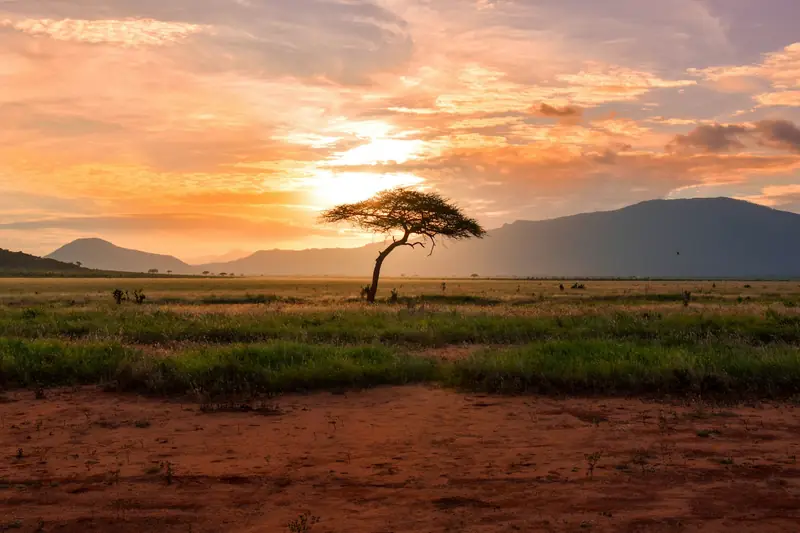
Stay in a lodge on the crater rim and watch the sun set over the caldera, 600 metres below.
Ngorongoro
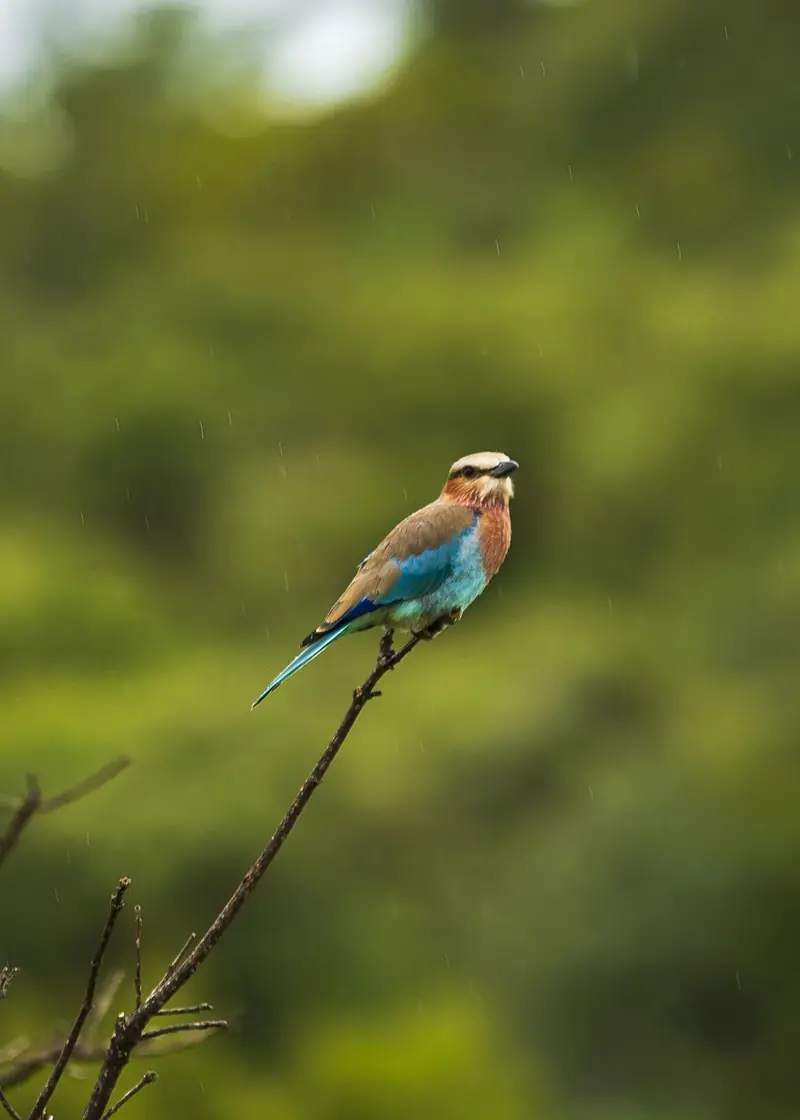
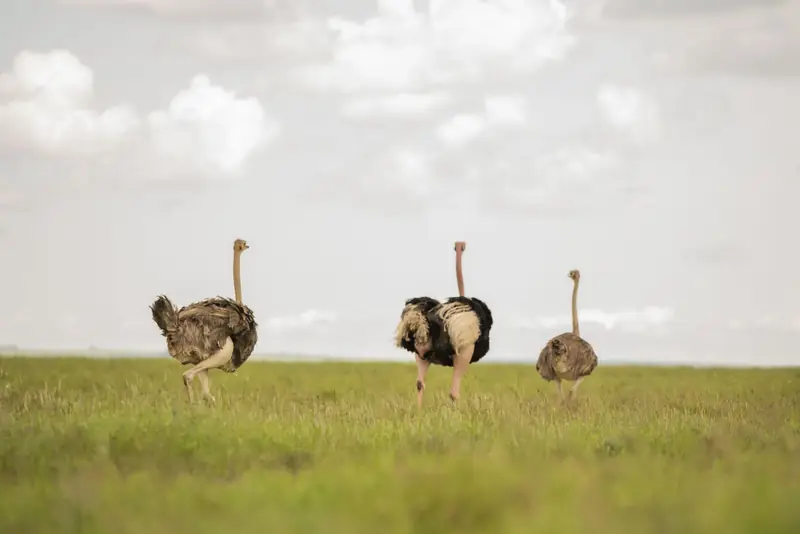
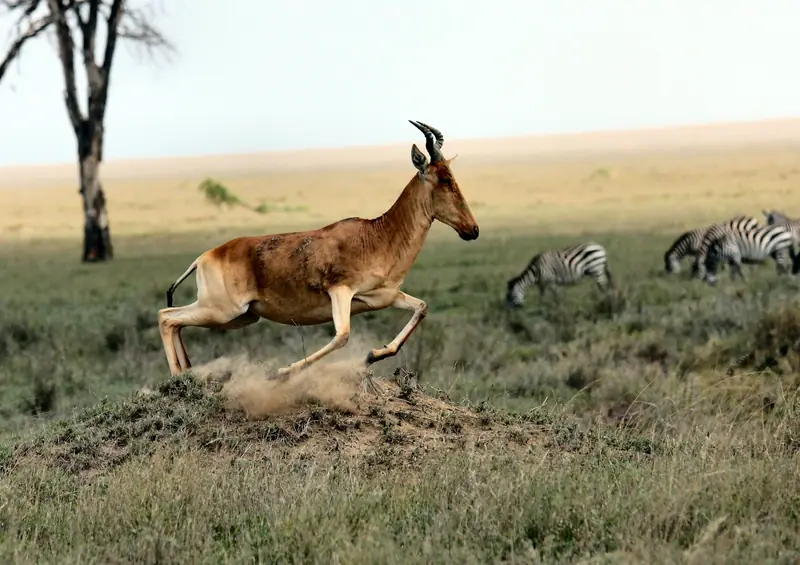
in pictures.
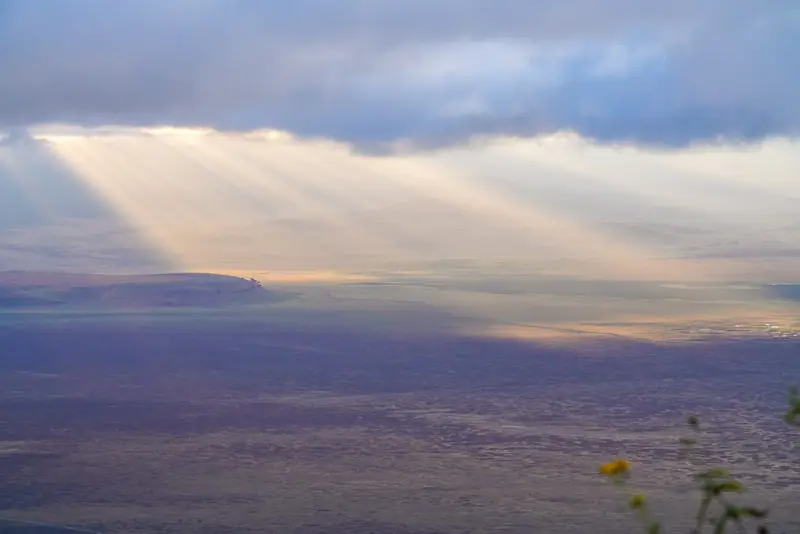
A glimpse of what is waiting for you.
Getting there.
Practical tips to help you plan your visit to Ngorongoro.
By road
About 3 hours from Arusha on a good tarmac road via Karatu, passing Lake Manyara on the way.
By air
The nearest airstrips are at Lake Manyara and the Ngorongoro rim area, with flights from Arusha.
Where to stay
Lodges on the crater rim offer spectacular views, while Karatu's farm lodges and coffee estates are a short drive away.
Good to know
The rim sits at over 2,200 m and can be cold at night and early morning, even in summer. Pack a warm fleece.
Safaris that visit Ngorongoro.
View All Safaris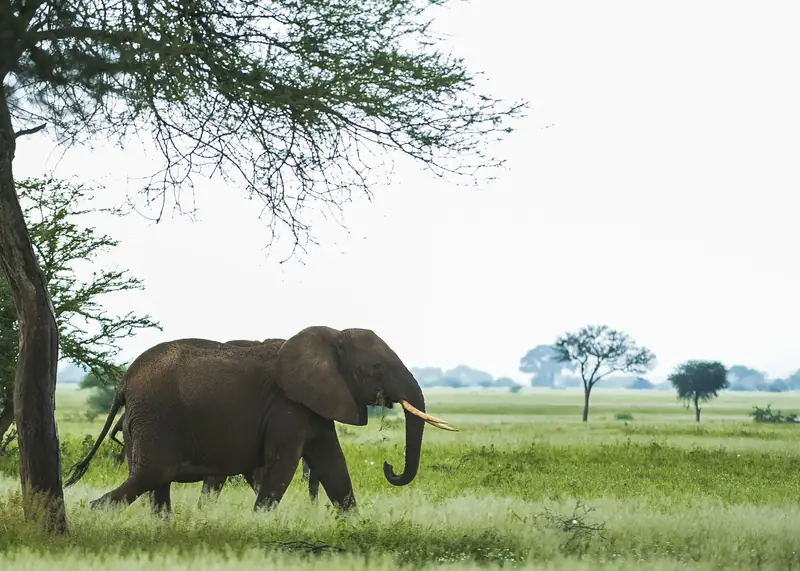
Frequently asked
questions.
See the crater for yourself.
Add the Ngorongoro Crater to your safari — we will handle every detail, from crater permits to your lodge on the rim.